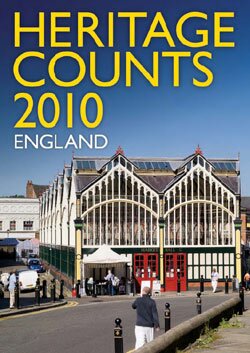
Heritage Counts 2010, the essential guidebook to the historic environment, was published on 13 October 2010. This year the publication focused on the economic benefits of the historic environment, looking in particular at the impact of historic environment regeneration and investment in historic visitor attractions. Key findings include
- £1 of investment in the historic environment generates £1.6 of additional economic activity over a ten year period.
- Investment in the historic environment attracts businesses, one in four businesses’ agree that the historic environment is an important factor in deciding where to locate, the same as for road access.
- Investing in the historic environment brings more visitors to local areas and encourages them to spend more, approximately one in five visitors to areas which have had historic environment investment spend more in the local area than before, and one in four businesses has seen the number of customers increase.
- Historic environment attractions generates local wealth. Half of all jobs created by historic environment attractions are in local businesses.
As in previous year the Heritage Counts report also includes an update on the key policy updates of the last year, including the potential opportunities and challenges for the future and a summary of the Heritage Counts indicators including visitor figures, planning applications affecting the historic environment and the number of heritage assets. A full set of Heritage Counts indicators can also be downloaded from the Heritage Counts website.
Regional Heritage Counts documents provide a regional specific summary of the economic impact research plus an overview of the regional indicators and policy developments.
To download the Heritage Counts reports, the full set of indicators or to find out more about the economic impact research please visit www.heritagecounts.org.uk
Heritage Counts 2009
Heritage Counts 2009, focused on the role of the historic environment in shaping what individuals think and feel about where they live – their sense of place.
New research by Newcastle University's Centre for Urban and Regional Studies (CURDS), Newcastle University International Centre for Cultural and Heritage Studies and Bradley Research and Consulting provided the first robust evidence that the historic environment has a positive and significant impact on people's sense of place.
Key findings include:
- Adults who live in areas of higher levels of historic environment are likely to have a stronger sense of place1
- Young people and adults who are more interested in the historic enviornment are likley to have a stronger sense of place1
- Young people and adults who cite a local building or monument as special are likely to have a stronger sense of place1
1When other socio-economic factors that impact on sense of place are held equal
A summary of the research can be found in the national Heritage Counts report
Heritage Counts 2008
Heritage Counts 2008 outlines how the historic environment sector is meeting the challenges of climate change, actions taken include:
- Undertaking high-quality research deepening our understanding of how to make historic buildings more energy efficient
- Using renewable energy sources within the historic enviornment without harming its character
- Adaptation to climate change and securing the historic environment for future generations
- Biofuels and the management of ths historic environment
- Mitigation solutions which reduce the sector’s cabon emmissions
Heritage Counts 2007
In addition to regular features Heritage Counts 2007 included topics as follows:
- Description of the impact of the Heritage White Paper, Planning White Paper and other major policy developments for the historic environment
- Reviewed the meaning and use of indicators for the historic environment since the first Heritage Counts in 2003
- Workforce for the historic environment in terms of availability of people with relevant skills and occupations and provision of training
- Highlighted the role of learning and the historic environment, through projects such as Engaging Places, and the potential for positive impacts on young people’s attitudes and behaviour; and skills, knowledge and educational attainment.
- Research reports on attending heritage sites and review of research on values and benefits of heritage
Heritage Counts 2006
In addition to regular features Heritage Counts 2006 included topics as follows:
- Characteristics of participation and removing barriers to participation in the historic environment
- Involvement in decision-making to do with the historic environment
- Role of the voluntary sector in the historic environment
- Research reports on heritage television viewing, voluntary organisations in the historic environment sector, and local authority consultation on planning