Let us guide you
Information for ...


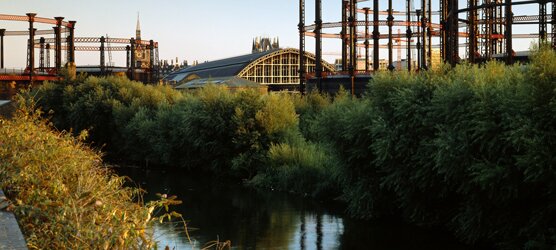
English Heritage has always been involved in highways and transport matters because they frequently have significant impacts on the historic environment. English Heritage has had greatest involvement in new road proposals and major upgrading activities, but also comments on strategy documents, appraisal systems and policy issues. Other forms of transport, including tram and light transit systems, railways and canals also feature in our work.
New developments are likely to have the greatest impact on the historic environment, but the existing transport network can have an impact particularly where there are high levels of congestion which can intrude visually and aurally on historic areas. Small developments may have a cumulative impact, either permanently (such as piecemeal dualling of trunk roads) or in ways that may be reversed (such as the accumulation of signs and other street clutter in historic areas).
Local authorities are key deliverers of transport and transport policy. In addition to the statutory environmental appraisal of local transport plans and schemes, local authorities can contribute to enhancing the quality of the local historic environment, for example by improving the streetscape, reducing congestion, or developing innovative transport plans that avoid the need for new and potentially damaging infrastructure.
English Heritage's Save our Streets campaign, in conjunction with the Women’s Institute, highlighted the detrimental impact of excessive numbers of signs, guardrails and other clutter on our streets. In 2005 Streets for All: guidance for practitioners was produced by English Heritage, in conjunction with the Department for Transport, and in 2008 English Heritage published 10 Streets For All: Practical Case Studies. These showcase the best ‘how to’ examples of councils which have taken the initiative to deal with a particular aspect of street clutter.
This policy statement, published in May 2006, is intended to inform developers and others about the importance and relevance of the historic environment and how it must be taken into account in development proposals affecting ports. The focus of the document is mainly on the marine aspect of new developments but it also touches on the development of existing ports and the additional, inland, impacts of development.
Policy on national or strategic transport issues is led by English Heritage's Policy Team. For information on specific transport schemes, please contact the relevant regional office.