Let us guide you
Information for ...


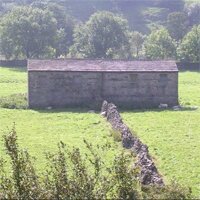
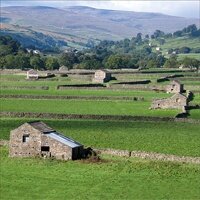
This report evaluates the social and economic impacts of grant-funded traditional farm building and drystone wall restoration in the Yorkshire Dales National Park. The research was funded by English Heritage, Defra and the Yorkshire Dales National Park Authority (YDNPA), and carried out by the University of Gloucestershire’s Countryside and Community Research Unit and ADAS.
The research examines six schemes, under which landowners and farmers were eligible to apply for grant funding over the period 1998 - 2004. The schemes considered in the research include Defra’s Pennine Dales Environmentally Sensitive Areas Scheme, the Countryside Stewardship scheme and the Rural Enterprise Scheme, as well as the National Park Authority’s Barns and Walls Conservation and Farm Conservation Schemes, and the Yorkshire Dales Millennium Trust Scheme, which is administered by a separate charitable trust.
Core data relating to the grant schemes awarded during the study period was collated from the agreement holder files held by Defra, the National Park Authority and the Millennium Trust. This enabled summary statistics on the nature and distribution of the grant schemes to be produced.
This initial data analysis was followed by a more detailed study of 53 agreement holders, which were broadly representative in terms of the cross-section of schemes used. The interviews were designed to collect information about: the grant and spatial distribution of expenditure arising from it; the farm business and the impact of the grants upon it; the building and walling restoration and public benefits of the restored features. A site visit was made to each of the agreement holder’s restored buildings and walls to verify the interview data, take photographs and make notes of their prominence in the landscape and from public viewpoints, such as footpaths and roads.
Interviews were also carried out with 10 building contractors and 6 walling contractors reported to have been actively involved in grant-funded restoration work, along with 6 of their suppliers. Data collection focused primarily on obtaining sufficient information to carry out a local economic impact analysis using an adapted Local Multiplier 3 (LM3) model to estimate the income and employment effects of the grants.
The complete document is available in hard copy from EH customer services (; ) or to download as a PDF document in four parts.