Let us guide you
Information for ...


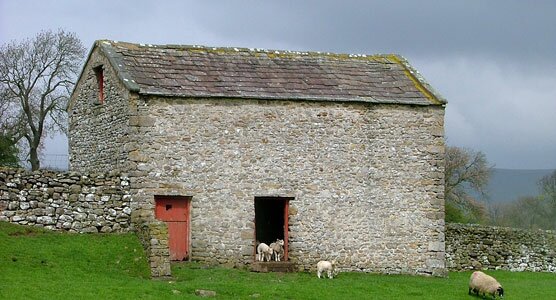
Historic farm buildings make a fundamental contribution to the landscape character and local distinctiveness of rural areas and are vital to our understanding of the development of agriculture and today’s settlement patterns.
Historic farm buildings also provide an important economic asset for modern farm businesses, often continuing in use on the farm. Where they have become redundant, they can provide a high-quality environment for new businesses or housing through adaptive re-use, helping to alleviate build pressure on green-field land and reducing the demand for new buildings in sensitive rural areas. Good design, responsive to local building traditions and landscape character, is essential if converted buildings are to enhance, rather than compromise local sense-of-place.
On this web site you will find advice for farmers, farm advisers, local authority planners and conservation officers, architects and others on the maintenance, management and adaptive re-use of these traditional buildings. It also provides access to the latest research on the condition of the traditional farm building stock as a whole and to new tools for understanding their character and their contribution to the landscape.
In July 2006 English Heritage and the Countryside Agency, in association with the Countryside and Community Research Unit of the University of Gloucestershire, published a joint policy statement: Living buildings in a living landscape: finding a future for traditional farm buildings. This statement is also available as a short version, which sets out the policy alone.
This statement provides advice from English Heritage and the Countryside Agency to those involved in planning, grant-aid, management or policy decisions affecting the traditional farm building stock or individual farm buildings in England. It also contains a national overview of the importance of traditional farm buildings, the drivers of change that affect their management and regional summaries of their character.
The statement is supported by eight Preliminary Regional Character Statements that provide more detailed information on the characteristics of traditional farm buildings on a region by region basis.
The English Heritage Characterisation Team is developing the evidence base further, through the mapping of farmstead character and change, the mapping of the patterns of current use, guidance for planners and land managers and guidance on character. A pilot website (http://www.farmsteadstoolkit.co.uk/) is now available for comment. It provides a character framework for all of England, including preliminary statements and sample illustrated statements for all of England’s 159 National Character Areas, and links to work on planning tools. A pilot project on the Bolton Abbey Estate in North Yorkshire has examined how the options for change for buildings common to many upland areas of England might be approached, and work is now progressing on refining character-based assessment in other parts of the country.
To supplement the policy statement English Heritage has published in October 2006 The Conversion of Traditional Farm Buildings: a guide to good practice. This publication provides detailed guidance for owners, designers, builders and conservation officers on how to achieve high quality conversions which respect the farm building’s historic significance and are in keeping with the character of England’s countryside. The guidance includes a ‘toolkit’ to help guide and inform decisions when conversion is being considered.
With Defra, the Farming and Wildlife Advisory Group and Association of Local Government Archaeological Officers, English Heritage has also published Farming the historic landscape: caring for farm buildings which provides advice to land managers and others on the maintenance and repair of these important structures.
The publication Historic farm buildings: Extending the evidence base summarises recent research commissioned by English Heritage into the state of the traditional farm building stock, the contribution this stock makes to countryside character, and trends in its adaptive re-use. This builds on the joint University of Gloucestershire, English Heritage and Countryside Agency document Historic farm buildings: Constructing the evidence base published in 2005.
English Heritage and Defra, in partnership with the Lake District and Yorkshire Dales National Park Authorities, have also carried out an evaluation of the social, economic and public benefits of the long-term programme of repairs to traditional farm buildings undertaken through the Lake District Environmentally Sensitive Area grant scheme between 1998 and 2004 (and through a variety of grant schemes in the Yorkshire Dales National Park, during the same period). The headline results of the project are published as Building Value: Public Benefits of Historic Farm Building Repair in the Lake District and Building Value: Public Benefits of Historic Farm Building and Drystone Wall Repairs in the Yorkshire Dales National Park.