Let us guide you
Information for ...


World Heritage Sites are places recognised under the UNESCO World Heritage Convention as having Outstanding Universal Value for the whole world. By joining the Convention in 1984, the United Kingdom has recognised its obligation to care for such places, of which there are now 18 in England out of 28 altogether in the UK and its dependent territories. Such care covers the identification, protection, conservation, presentation and transmission to future generations of such places.
The range of World Heritage Sites in England is very wide. There is one natural site, the Dorset and East Devon Coast. The 18 cultural sites include major archaeological sites such as Stonehenge and Avebury, and Hadrian’s Wall, as well as major religious buildings such as Canterbury and Durham Cathedrals. The urban cores of Bath and Liverpool are also World Heritage Sites. Common to nearly all English World Heritage Sites is that they are in multiple ownership and use.
World Heritage status can bring enormous prestige to a site and help foster social cohesion and pride in a local community. It may help to promote the site internationally and attract new visitors, if appropriate, and encourages the highest quality standards for welcoming visitors and managing the site and can act as the focus for tourism and economic regeneration. It also means international accountability. If a site is threatened, it can be added by the World Heritage Committee to the List of World Heritage Sites in Danger.
The protection of a World Heritage Site is the responsibility of national governments, working with the local authorities and stakeholders. To ensure that all World Heritage Sites are managed in a sustainable way that protects their Outstanding Universal Value, each nomination must be accompanied by a World Heritage Site Management Plan developed by a Steering group. Such Plans help ensure the preservation of the site by establishing a framework for decision making. They identify opportunities and long-term objectives. All UK sites have Management Plans in place some of which are on their second or third iteration. In addition, governments submit a periodic report to UNESCO every six years on the state of conservation of World Heritage Sites in their territory.
In the UK, World Heritage Sites are protected primarily through individual designation and through the spatial planning system as World Heritage Sites are key material considerations (PPS 5 and Circular 07/09) when Local Planning Authorities determine applications. World Heritage Sites are from 1st October 2008 article 1(5) land which means that certain types of permitted development are not allowed. Revised call in regulations for World Heritage Sites came into force in April 2009. The World Heritage Circular and accompanying English Heritage guidance – endorsed by CLG and DCMS ministers – emphasise the key role of Planning Authorities in ensuring that World Heritage Sites and their Outstanding Universal Value should be protected, promoted, conserved and sustainably used and the importance of ensuring there are appropriate policies in Local Plans, Development Frameworks and other Planning Documents.
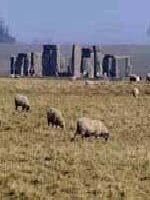
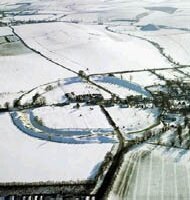
The implementation of the WHS Management Plan relies on the effective co-operation of the stakeholders. These work most effectively when a coordinator is employed. At Stonehenge, the WHS Management Plan was adopted as Supplementary Planning Guidance by Salisbury District Council, and there is a WHS Policy in the Local Plan. It is to be hoped that other Local Authorities will also adopt their Management plans or elements of them.
The process of developing a Management Plan involves bringing together all the key stakeholders to agree a common vision for the future of the site. As a result, working links are reinforced and new projects emerge. At Stonehenge, over 70 organisations and individuals were involved in this process and Hadrian’s Wall unites over 53 different authorities. World Heritage status may also make it easier to negotiate additional funding, protection or expertise. For instance, at Stonehenge and Avebury, a special grant scheme was put in place following the publication of the WHS Management Plans. It encourages farmers to convert arable land to grassland for the benefit of the archaeological landscape, the setting of Stonehenge and biodiversity. It was made possible thanks to an exemplary partnership between English Heritage, the National Trust, English Nature and the Department of Environment, Food and Rural Affairs (DEFRA).
Additional advice is available from your local authority conservation team, English Heritage at , UK UNESCO, ICOMOS UK and the Local Authorities World Heritage Forum.