






Let us guide you
Information for ...


Community-Led Plans are grass-roots initiatives by local people planning for the future of their village, parish or neighbourhood. They do this by producing a common vision of how their community should look or develop in the future and working together to achieve this through the planning system and other means.
Community-Led Plans originated in the countryside, through Village Appraisals, Village Design Statements and Parish Plans. Similar initiatives were subsequently developed in urban areas though town and neighbourhood plans and design statements and market town health-checks. Through its Localism Bill the Government now plans to give renewed impetus to community-led planning through a new generation of Neighbourhood Plans.
English Heritage believes that a community's heritage is fundamental to its individuality, its sense of identity and its future prosperity. Our ambition is to see all Community-Led Plans harness the power of this heritage to benefit local people.
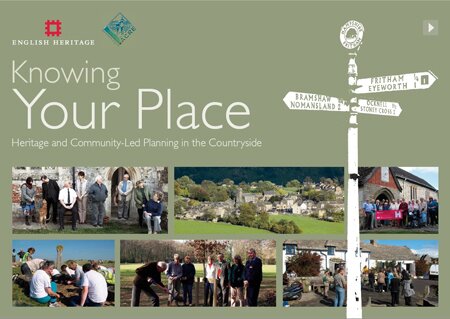
In March 2011 English Heritage in partnership with Action with Communities in Rural England (ACRE) produced Knowing Your Place: Heritage and Community-Led Planning in the Countryside to help rural communities that are producing, reviewing or updating their plan.
The guidance has been produced in partnership with ACRE, and is supported by the Association of Small Historic Towns and Villages (ASHTAV), Campaign to Protect Rural England (CPRE), Civic Voice, Council for British Archaeology (CBA), Country Land and Business Association (CLA), European Council for the Village and Small Town (ECOVAST), and National Association of Local Councils (NALC).
The guidance is designed to complement and add more detail on heritage to the community planning toolkit provided by ACRE, available online at www.acre.org.uk. It is available as web-based resource and downloadable PDF.
Guidance produced by:
Guidance supported by: