Let us guide you
Information for ...



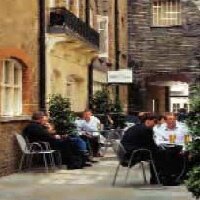
Retail Development in Historic Areas, published in 2005, pools the experience of English Heritage and the retail development industry, drawing on recent advice from DCLG, CABE, the Historic Towns Forum and others. Its purpose is to set out guidelines for achieving high quality new retail development in historic areas. It is hoped that this document will be helpful to planning authorities and developers in preparing and considering new retail schemes in historic areas.
The report includes a series of case studies which illustrate how the expectations of the developer, the trader and the customer can be accommodated while preserving historic places and enhancing their surroundings. The case studies show how retail development can be successfully integrated within an historic context and add to economic prosperity. In addition, the report provides guidelines to assist local authorities and the development sector to achieve creative, robust solutions for new retail development in historic areas.
The structure of this report includes:
The policy context for this report is provided by Planning Policy Statement PPS6: Planning for Town Centres (DCLG, 2005), which sets out the government’s objective to promote the vitality and viability of town centres by planning for the growth and development of existing centres and encouraging a wide range of services in an attractive environment, accessible to all.