School Buildings

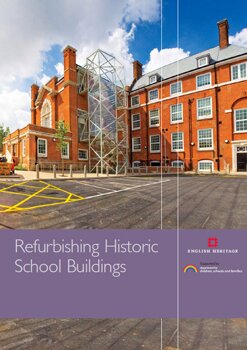
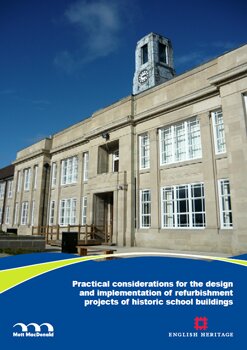
Sir John Moore C of E Primary SchoolSir John Moore C of E Primary School in Appleby Magna, Leicestershire occupies a Grade I listed building dating from 1697 and executed from designs prepared by Sir Christopher Wren. By 1998, the building was on the English Heritage Buildings at Risk register due to its condition, and proposals were made to relocate the school and dispose of the existing site. However, there was a great deal of support locally for the school to remain in its historic location, and a feasibility study was commissioned which identified a programme of works to enable the school to be adapted for modern requirements.These works were completed in 2003, and staff and pupils now enjoy fully updated facilities within the setting of a striking historic building. © English Heritage

Many school buildings play an important role in adding to local character. They are often an integral part of local identity; they represent a powerful sense of community through the shared experiences and memories they engender, while many continue to act as a social hub through their secondary uses such as community, sports or life-long learning actitivities. The result is that school buildings are often an anchor-point within their community, both in terms of their physical location but also in the way they are regarded and valued by local people that goes far beyond their original educational purpose.

English Heritage has been supportive of the Government Building Schools for the Future programme since its inception, and we recognise the modernisation opportunities and benefits offered by the largest investment programme in living memory. We have also been mindful of the need for change to ensure that schools continue to represent the best possible learning environment for their students. Nevertheless, the level of funding attached to the current investment programmes allied to their objectives of renewing the vast majority of the existing stock of school buildings has obvious implications for historic school buildings, be they listed, within conservation areas or simply buildings that are liked and valued by their local community.

English Heritage has therefore produced The Future of Historic School Buildings to set out our position. This document identifies a series of case studies in which imaginative and innovative approaches to the future use of historic school buildings has produced positive and successful outcomes. These include updating and refurbishment, adaptation, extension and conversion to a new use. The position statement also contains a checklist for historic school buildings which is a helpful tool to use when developing policy and proposals in this area, while we have also produced a model brief to help local authorities to undertake assessments of the historic and architectural significance of their school estate.

What's New

  • Tuesday 3 February 2009 - LGA/English Heritage Conference - Local Government House, London SW1. How can we make the most of the forthcoming heritage protection reforms, - although the Heritage Protection Bill was not included in the Queen’s Speech, a raft of changes which do not require legislative change are currently underway – new planning policy statements, and related guidance?
  • English Heritage, which launched the Save our Streets campaign in 2004, has now published the best “how to” examples from around the country in ten Streets for All: Practical Case Studies. These showcase examples of councils who have taken the initiative to deal with a particular aspect of street clutter.