Retail Development

Corve Street entrance: the night time illumination enhances the crisp, stylish form of the building.Corve Street entrance: the night time illumination enhances the crisp, stylish form of the building.
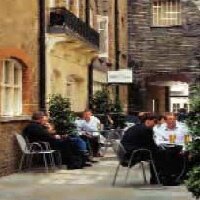
In the early 1990s the yards and passageways between Brook Street and Bond Street in Mayfair were earmarked for redevelopment. Planning permission for demolition was granted, but the developers opted for a successful mix of refurbishment and infill.Lancashire Court/Avery Row, London W1.  In the early 1990s the yards and passageways between Brook Street and Bond Street in Mayfair were earmarked for redevelopment. Planning permission for demolition was granted, but the developers finally opted for a combination of refurbishment and judicious infill. The area is now a successful mix of high quality shops, restaurants and a museum, all supporting a lively street scene.

Retail Development in Historic Areas, published in 2005, pools the experience of English Heritage and the retail development industry, drawing on recent advice from DCLG, CABE, the English Historic Towns Forum (EHTF) and others. Its purpose is to set out guidelines for achieving high quality new retail development in historic areas. It is hoped that this document will be helpful to planning authorities and developers in preparing and considering new retail schemes in historic areas.

The report includes a series of case studies which illustrate how the expectations of the developer, the trader and the customer can be accommodated while preserving historic places and enhancing their surroundings. The case studies show how retail development can be successfully integrated within an historic context and add to economic prosperity. In addition, the report provides guidelines to assist local authorities and the development sector to achieve creative, robust solutions for new retail development in historic areas.

The structure of this report includes:

  • an overview of the challenge facing retail development in historic areas
  • an outline of the importance of retailing in historic areas
  • trends in retailing
  • a series of case studies
  • guidance for achieving high quality new retail development within an historic context

The policy context for this report is provided by Planning Policy Statement PPS6: Planning for Town Centres (DCLG, 2005), which sets out the government’s objective to promote the vitality and viability of town centres by planning for the growth and development of existing centres and encouraging a wide range of services in an attractive environment, accessible to all.

What's New

  • Tuesday 3 February 2009 - LGA/English Heritage Conference - Local Government House, London SW1. How can we make the most of the forthcoming heritage protection reforms, - although the Heritage Protection Bill was not included in the Queen’s Speech, a raft of changes which do not require legislative change are currently underway – new planning policy statements, and related guidance?
  • English Heritage, which launched the Save our Streets campaign in 2004, has now published the best “how to” examples from around the country in ten Streets for All: Practical Case Studies. These showcase examples of councils who have taken the initiative to deal with a particular aspect of street clutter.